
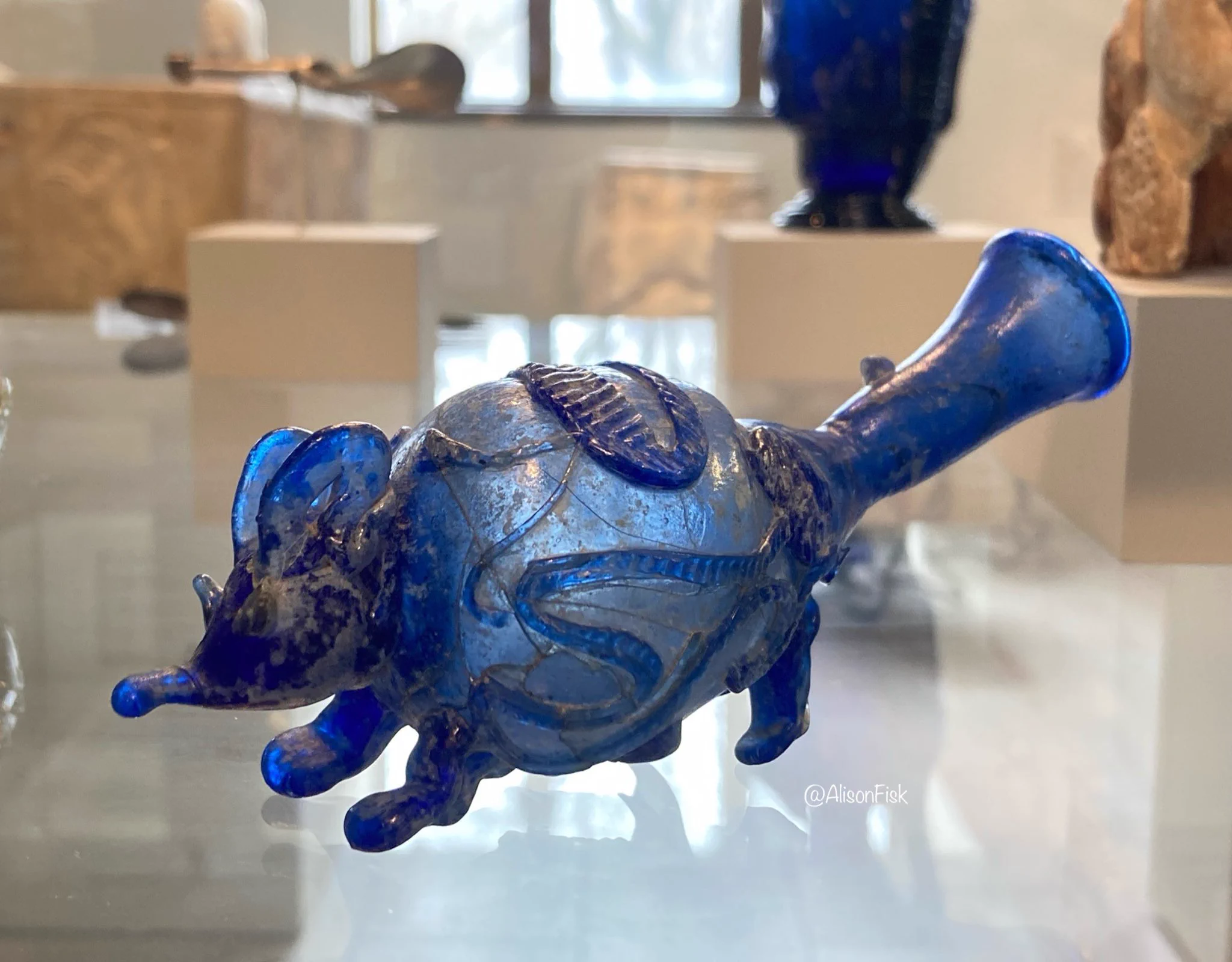
Something lovely for the weekend! A 1,800 year-old Roman cobalt blue glass flask shaped like a little mouse. 📷 my own #Archaeology#

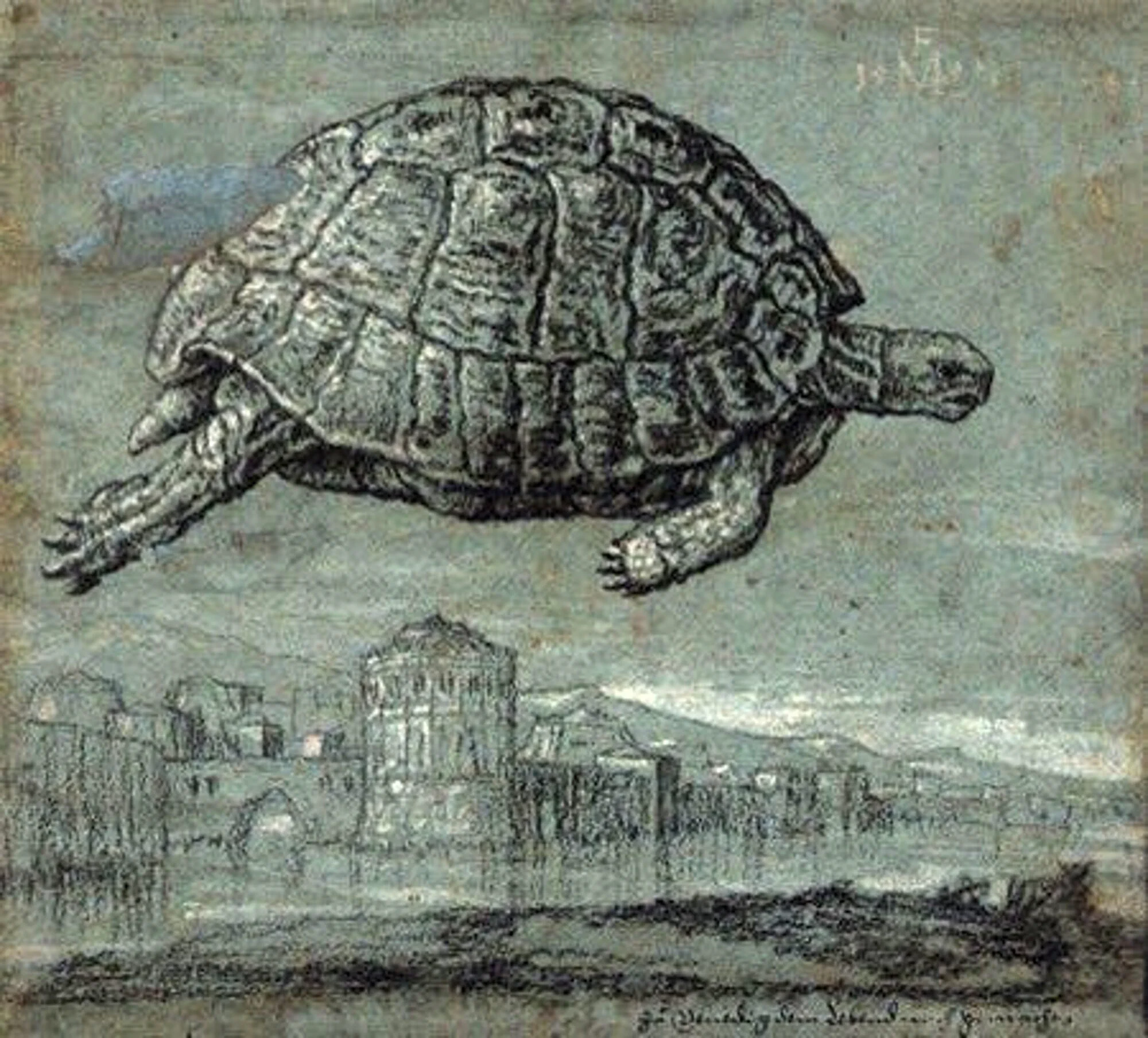
A surreal drawing of a tortoise flying above a Venetian cityscape, created by Melchior Lorck in 1555.
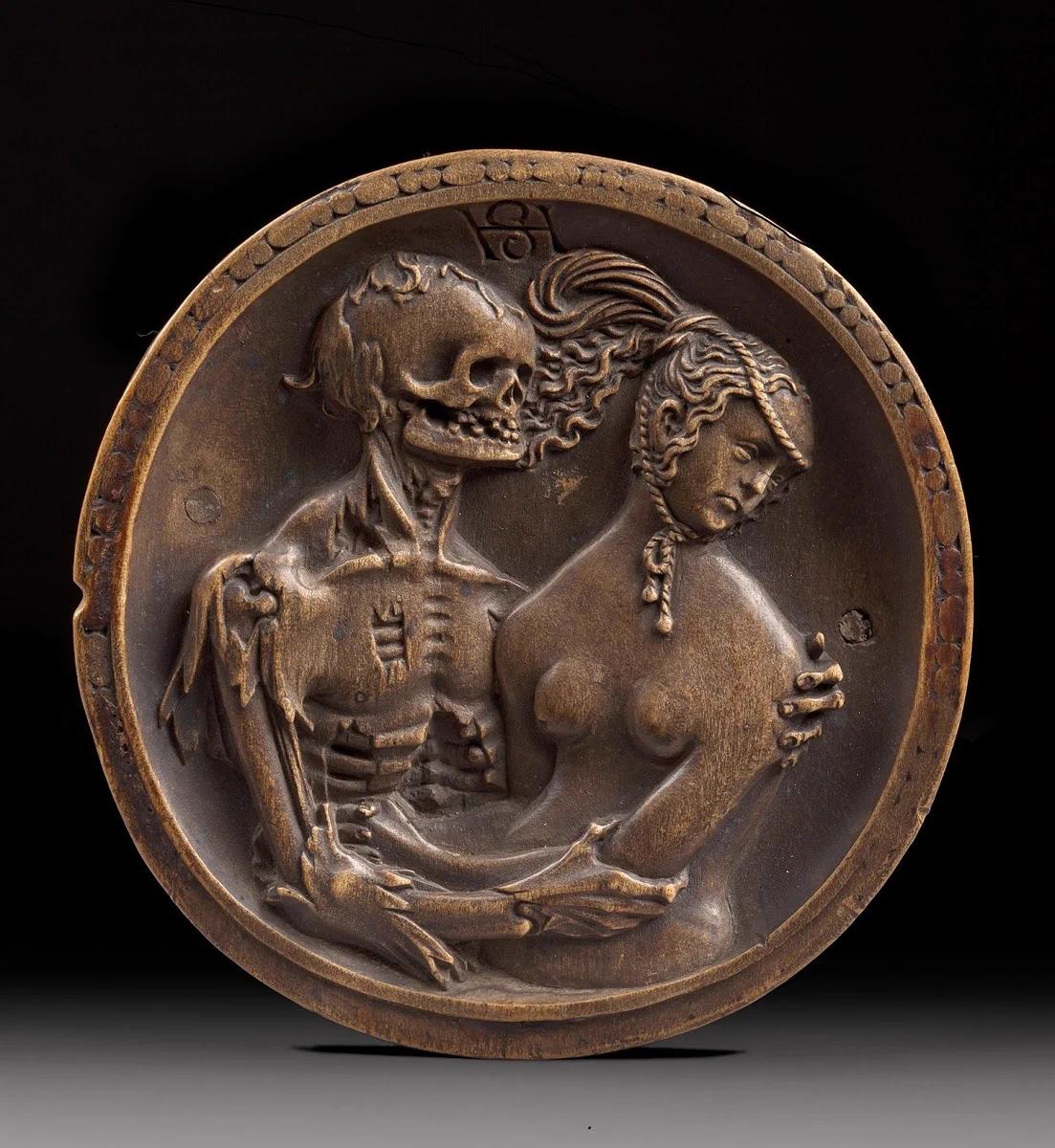
"Death and the Maiden" is a boxwood medallion carved by Hans Schwarz in 1520. Currently on display at the Bode Museum in Berlin. The motif of "Death and the Maiden" has its origins in late medieval and Renaissance art. This theme was particularly relevant during times of plague and war, when death was a constant presence.
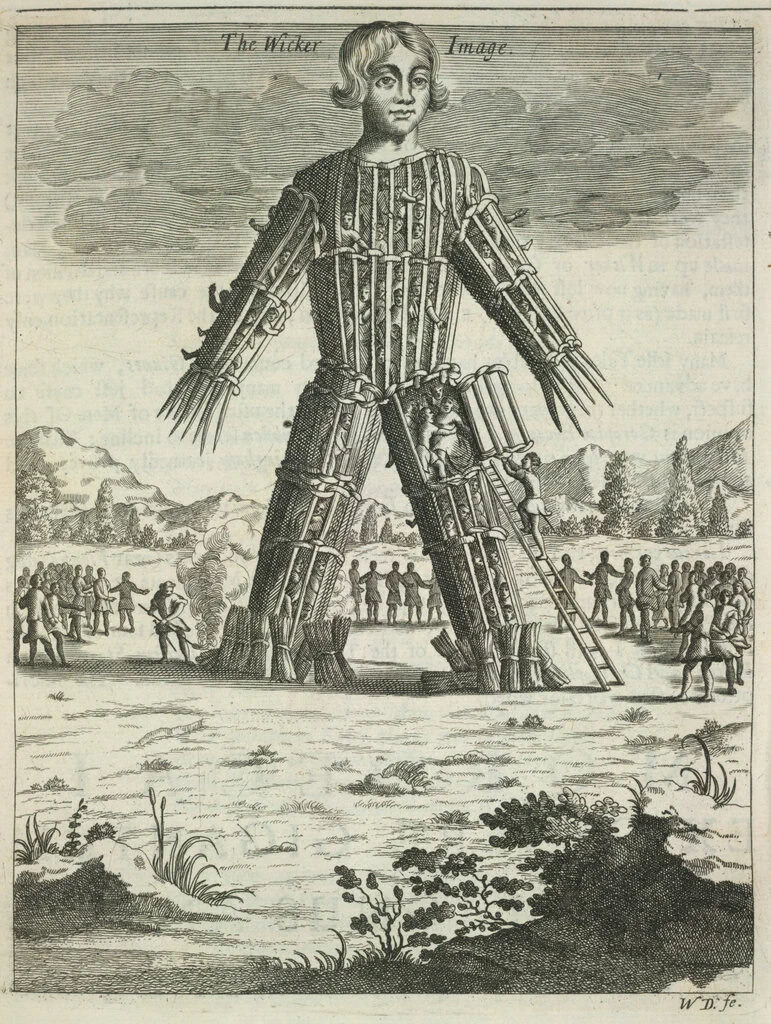
“A wicker man, filled with human sacrifices, waiting to be burned. The wicker man ritual was described by Julius Caesar in Book Six of The Gallic War, in which he describes the customs of the Celts of Gaul.” Aylett Sammes, 1676.
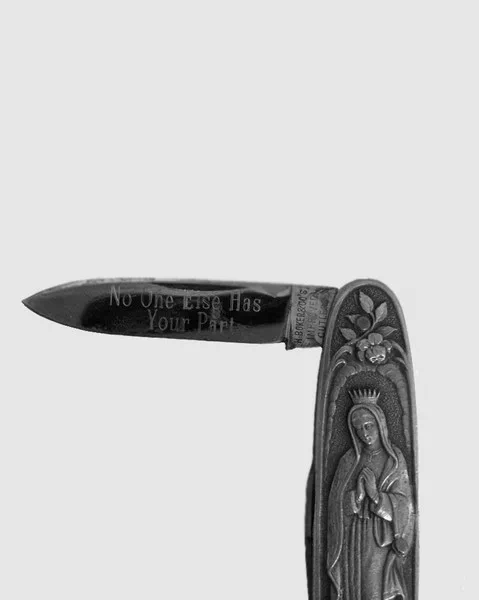
A vintage folding knife from approximately 1919. The blade features an inscription: "No One Else Has Your Part." The handle is ornately designed, depicting the figure of the Virgin Mary, crowned and holding her hands in a gesture of prayer
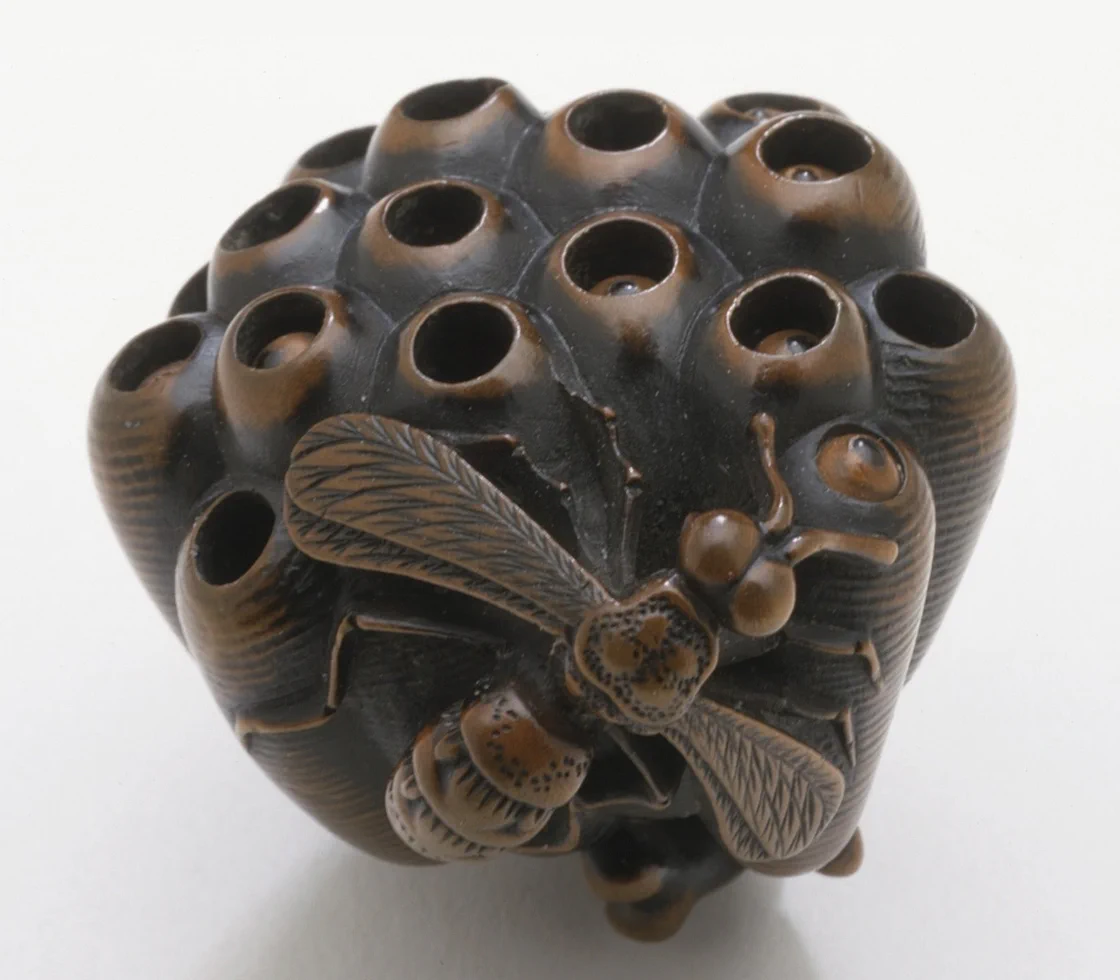
Carving of a wasp's nest. Japan, Edo period, 1800-1850
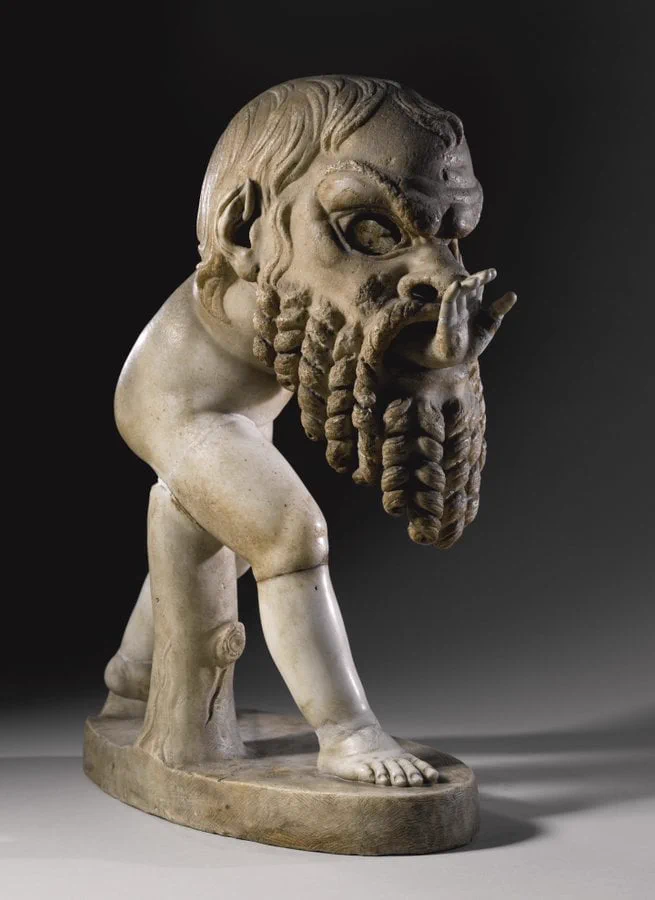
Statue of a Young Satyr Wearing a Theater Mask of Silenos, ca. 1st century AD. Anonymous sculptor, with 1628 restorations by Alessandro Algardi. Collection of the Art Institute of Chicago. The satyr and Silenos are key figures in Greek mythology, particularly in their association with Dionysian festivities, which were marked by wild celebrations and theatrical performances. Satyrs, often represented as half-human, half-goat creatures, embodied the untamed forces of nature, while Silenos, their leader, was considered wiser, albeit prone to indulgence.
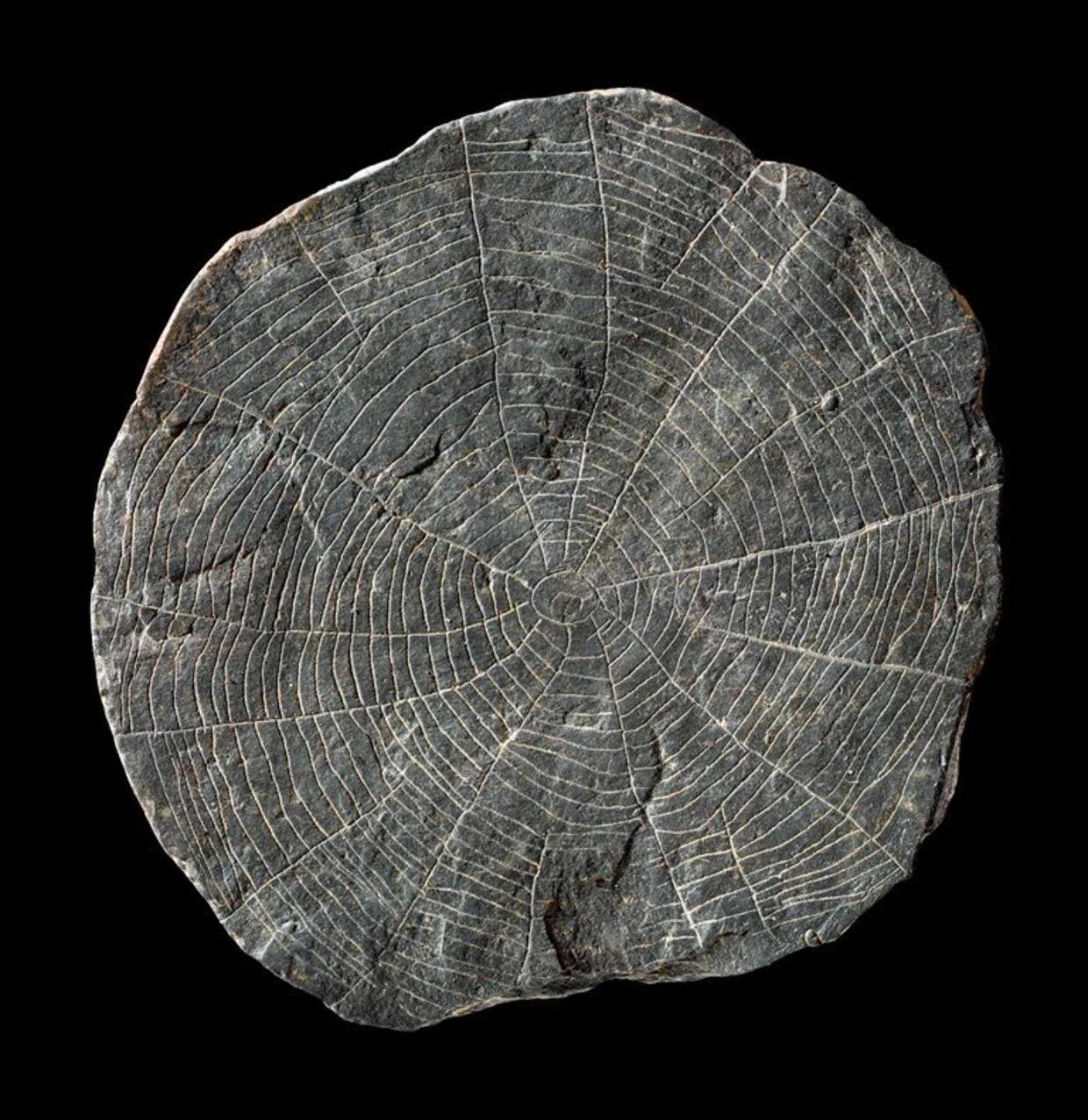
A 5,000-year-old 'spider stone' found in the island of Bornholm in Denmark. Collection: Bornholm Museum
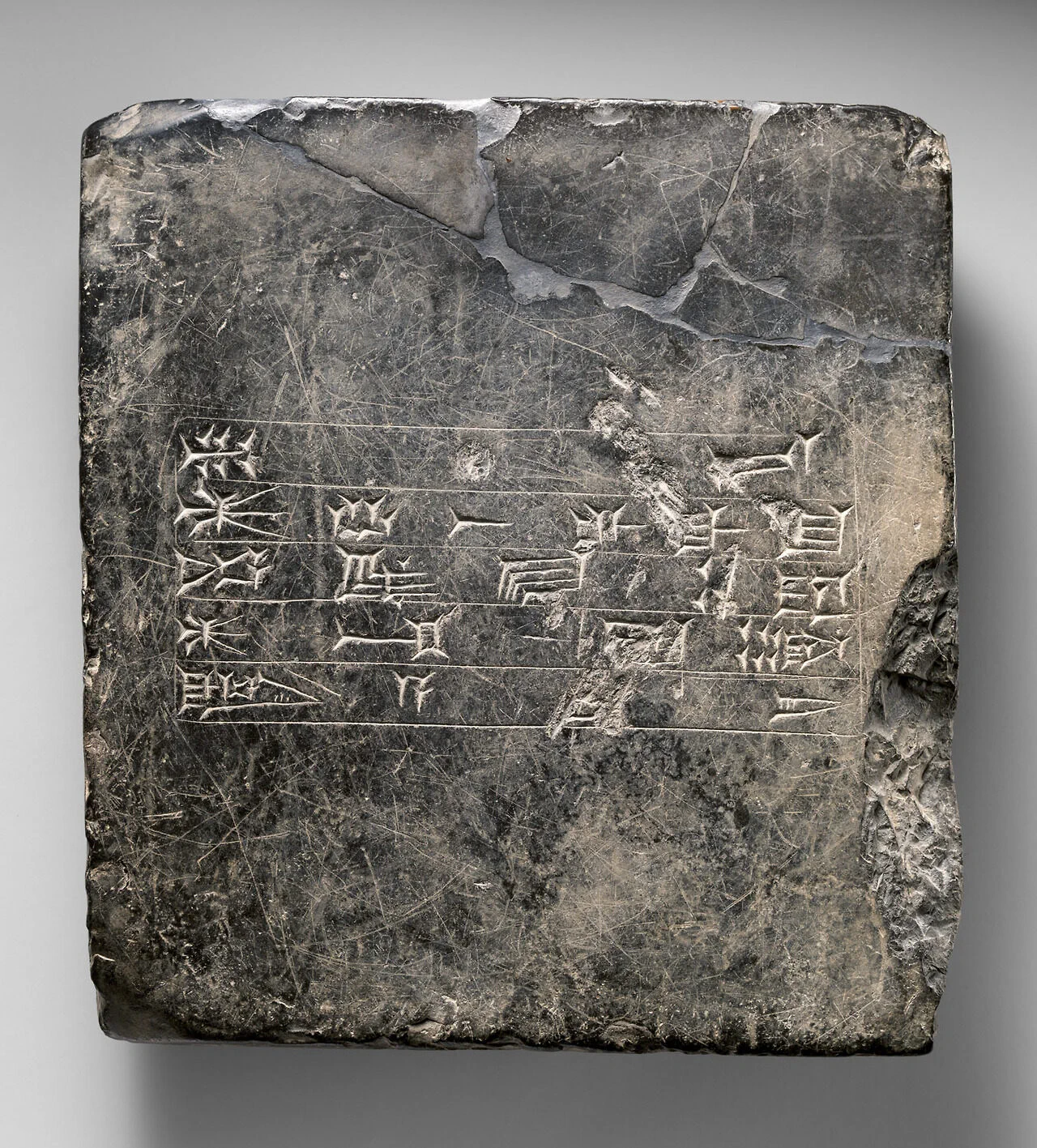
Cuneiform tablet inscribed with a Sumerian dedicatory text from Ekur, the temple of the god Enlil, dated to around the 16th–15th century BC.
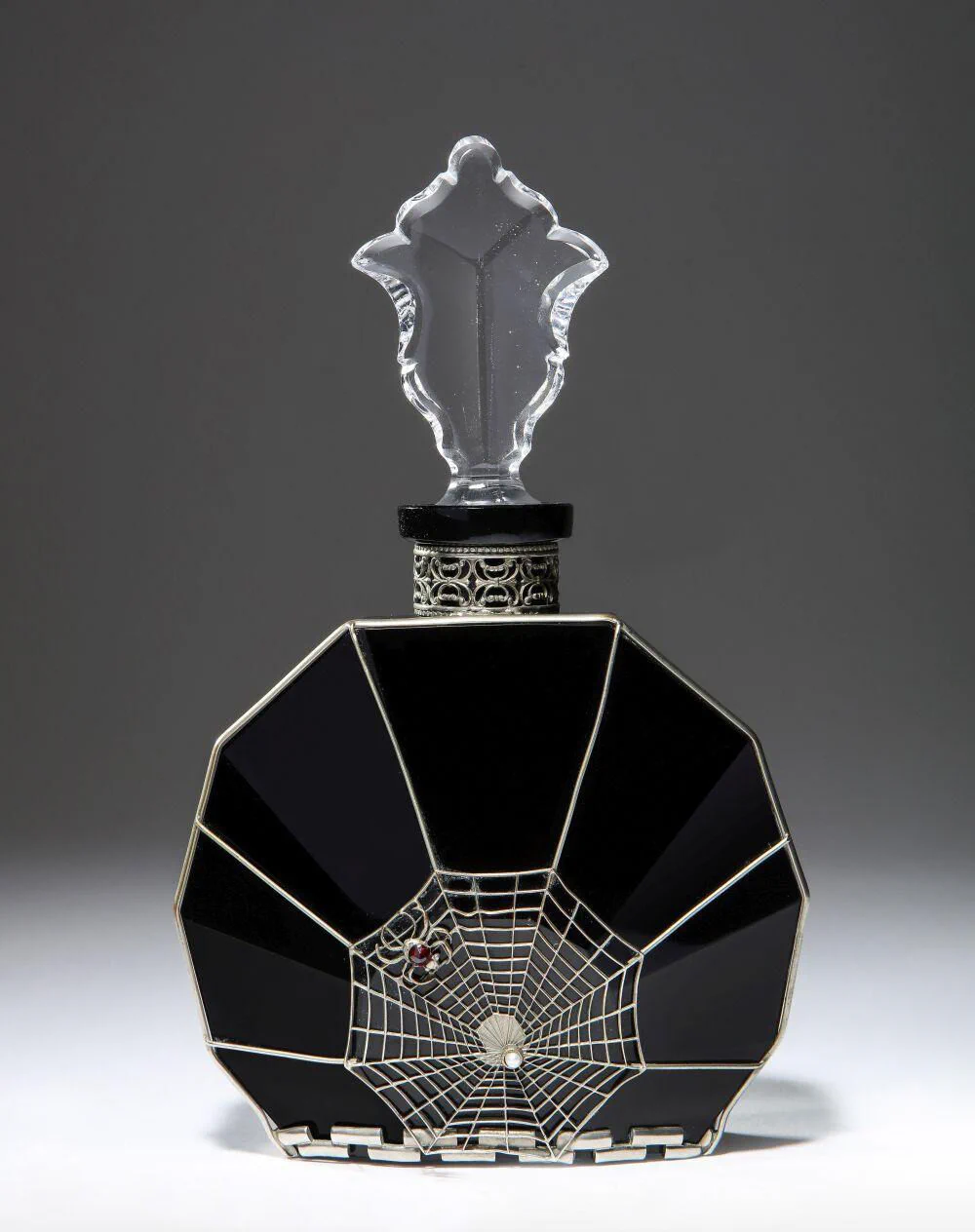
Art Deco perfume bottle by Turriet & Bardach, made in Czechia circa 1930.
A grotesque depiction of a devil emerging from the jaws of Hell, illustrated in a Bible moralisée from the 15th century.

Ancient and beautiful engraved amber pendants worn by hunter-gatherers some 10,000 years ago. Mesolithic period. 📷 National Museum of Denmark #Archaeology#


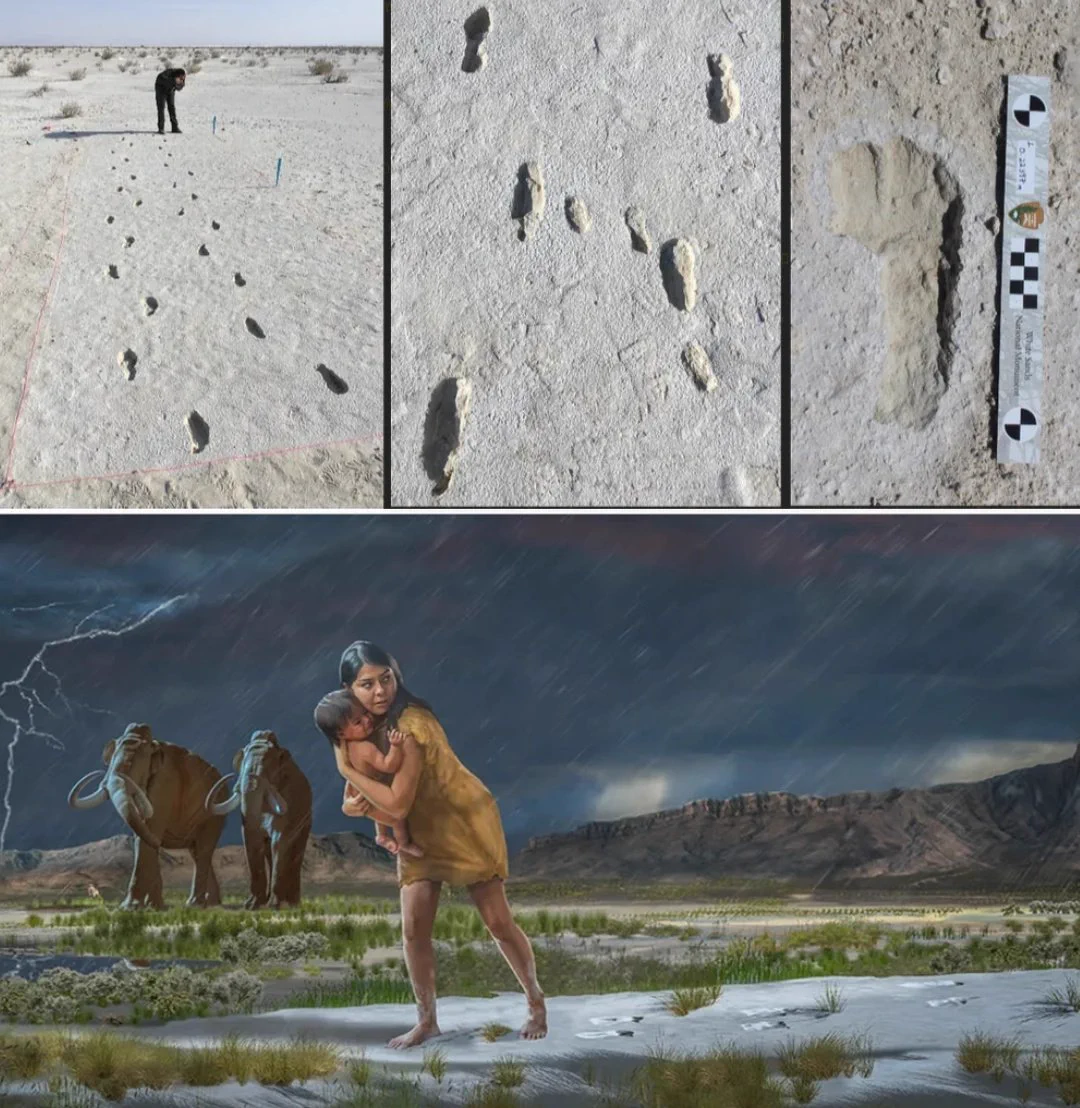
Woman's Path Through History Over 10,000 Years Ago - a woman or young man carried a toddler across a muddy terrain in present-day White Sands National Park, New Mexico... These ancient footprints offer scientists a remarkable glimpse into the past. This revelation is courtesy of the National Park Service and Bournemouth University. The prehistoric traveler embarked on a journey carrying a child, returning alone hours later. In an arduous trek more than 10,000 years ago, a woman or a young man with a toddler balanced on one hip trudged northward through what is now White Sands National Park in New Mexico. Facing potential rain and slippery mud, the traveler briefly set the child down before continuing. Along the way, a woolly mammoth and giant sloth crossed their path. Hours later, the traveler retraced their steps south, now without the child. Scientists have documented nearly a mile of these fossilized footprints—the longest human trackway of its age ever found. “I’ve never seen anything quite like it,” says evolutionary biologist Kevin Hatala from Chatham University, who was not involved in the study. This trackway, featuring over 400 human prints including tiny child prints, is detailed in a new study published in Quaternary Science Reviews. By examining the footprints' shape, structure, and distribution, researchers revealed an intimate portrait of this ancient journey, capturing even the traveler’s toes slipping on the wet surface. Meticulous Excavation of Footprints Scientists carefully unearthed these delicate footprints, documenting them in three dimensions before they could deteriorate. The tracks also revealed a mammoth and a giant sloth traversing the area after the humans passed. While the mammoth appeared indifferent to the human presence, the sloth likely sensed it, rearing up as modern bears do to detect scents. “This gives us insight into humans within their ancient ecosystem,” explains study author Sally Reynolds, a paleontologist at Bournemouth University, noting the sloth’s awareness of nearby humans—an insight not gleanable from bones alone. The 'Ghost Tracks' Fossil footprints provide stunning snapshots of ancient behaviors, preserving moments in time unlike any other remains. “Footprints sites are special because they capture a moment in time,” says paleoanthropologist William Harcourt-Smith from the City University of New York. This track site, part of an ongoing documentation project at White Sands National Park, owes its discovery to David Bustos, the park’s resource program manager. These shallow impressions, visible only through slight moisture-induced color changes, became known as “ghost tracks.” In 2016, Bustos consulted various specialists about the tracks, including Matthew Bennett from Bournemouth University, who led the new study. Since then, Bennett and his colleagues have made multiple trips to document the array of human and animal prints throughout the park. The newly studied prints are set in fine sand, held together by a thin salt crust. The team excavated 140 tracks using brushes, and recorded each print with 3D photogrammetry before they could erode. By analyzing the footprints' shape, size, and distribution, researchers pieced together the ancient journey. The primary traveler was likely a woman or young man, based on footprint length comparisons with modern humans. Small child prints join the main trackway in several places, indicating a child under three years old accompanied the traveler. Traveler's pace was brisk, about 3.8 miles per hour, despite muddy conditions and carrying a child. In some spots, unusually long strides suggest stepping over obstacles like puddles or mammoth dung. The child was carried northward, evidenced by larger left foot tracks from bearing extra weight. Upon return, traveler’s footprints show no size discrepancy, and fewer signs of slipping, indicating they were now unencumbered. © The Archaeologist #archaeohistories#
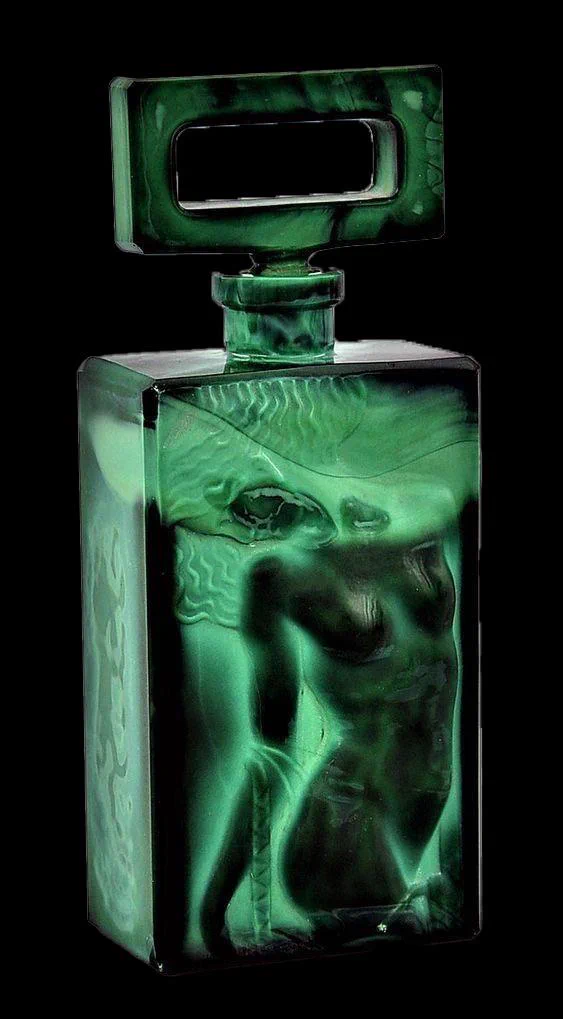
Art Deco malachite glass bottle designed by Henry Schlevogt under the Ingrid Brand, Czechoslovakia, early 20th century.
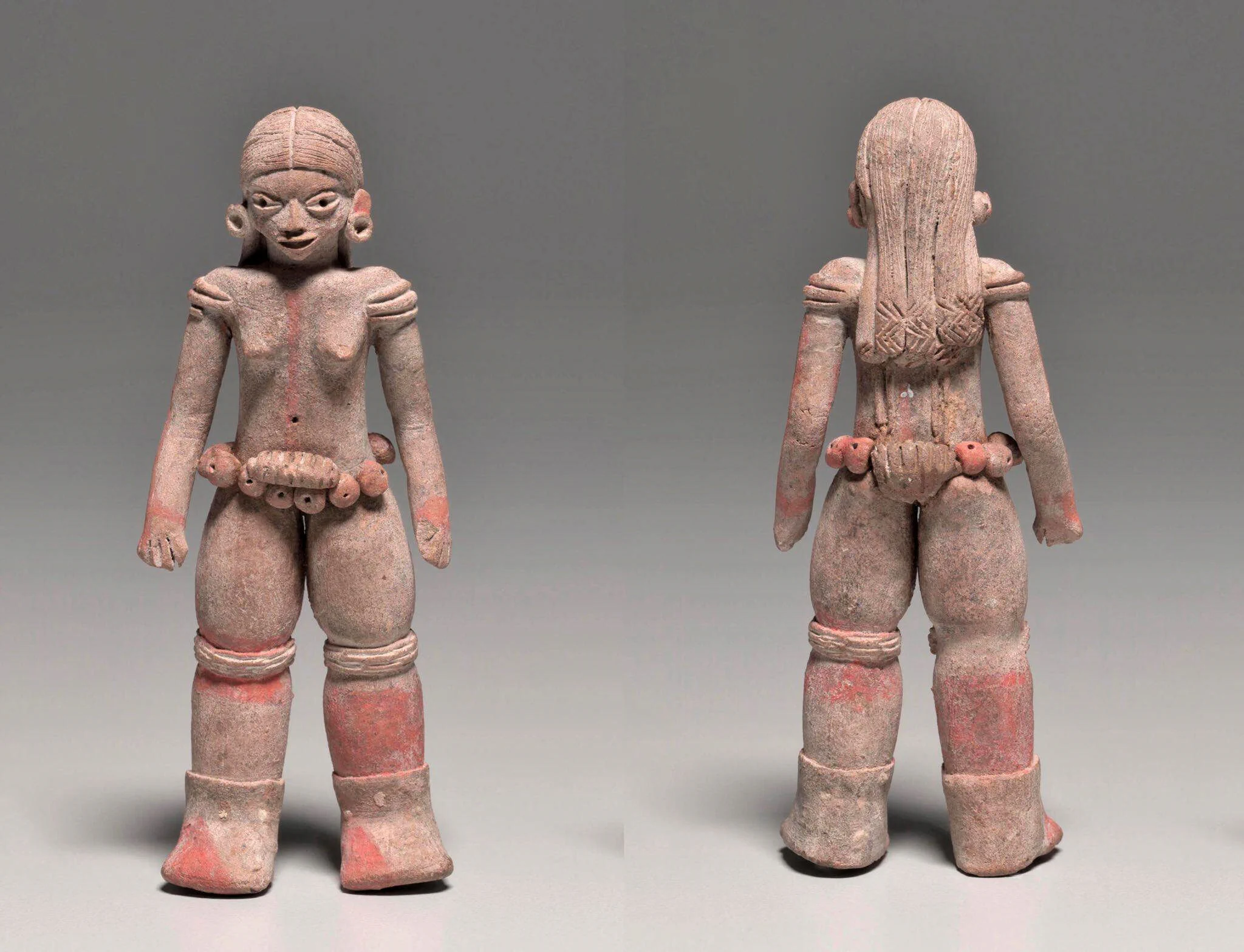
Female figurine from Guerrero, Mexico, Xalitla region, crafted in the Xochipala style, dating from approximately 1500–500 BC, made of earthenware with pigment decoration. Collection & Credit: The Getty.
Bronze and glass sculpture titled "Naissance Rose," created by French artist Arman (Armand Pierre Fernandes, 1928-2005). Signed on glass. Credit: Abington Auction Gallery, Inc.
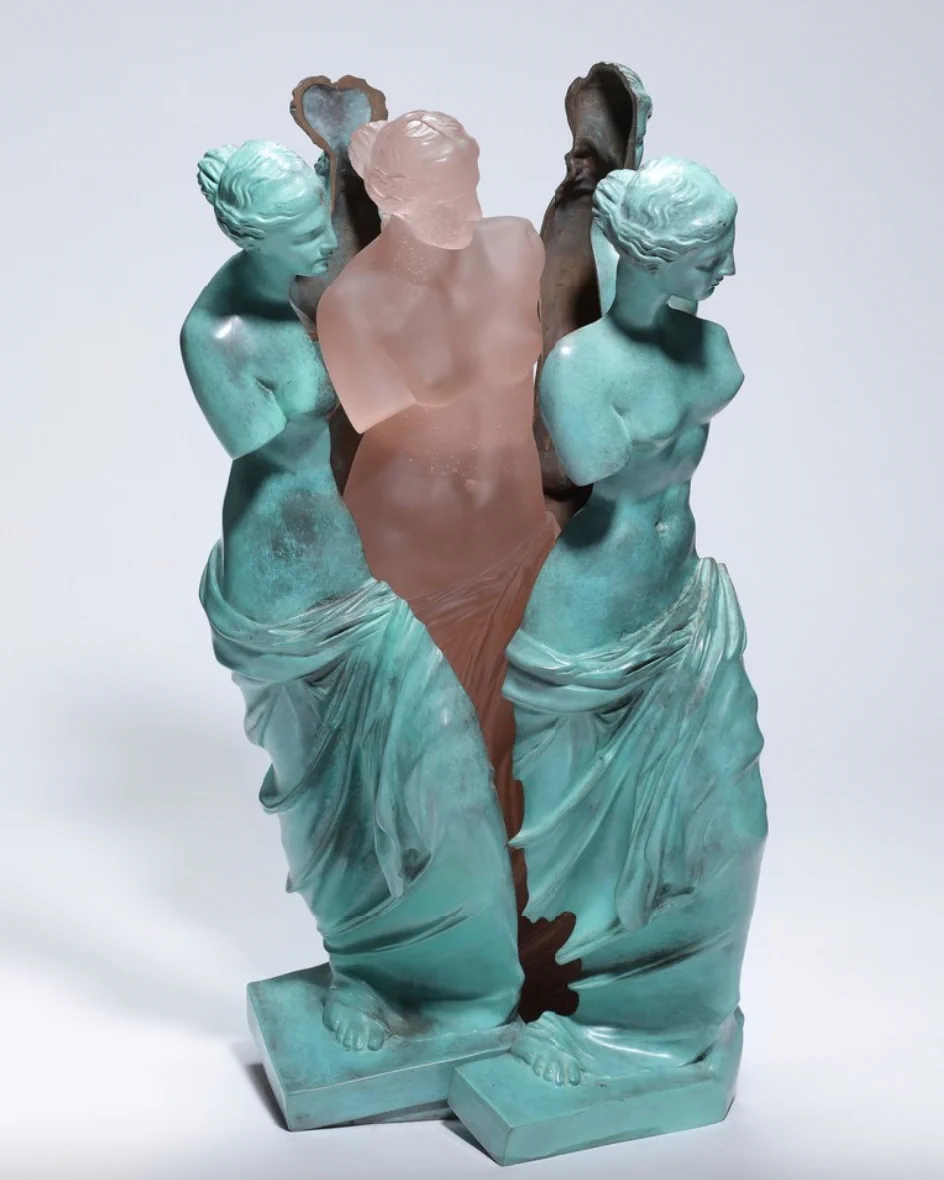
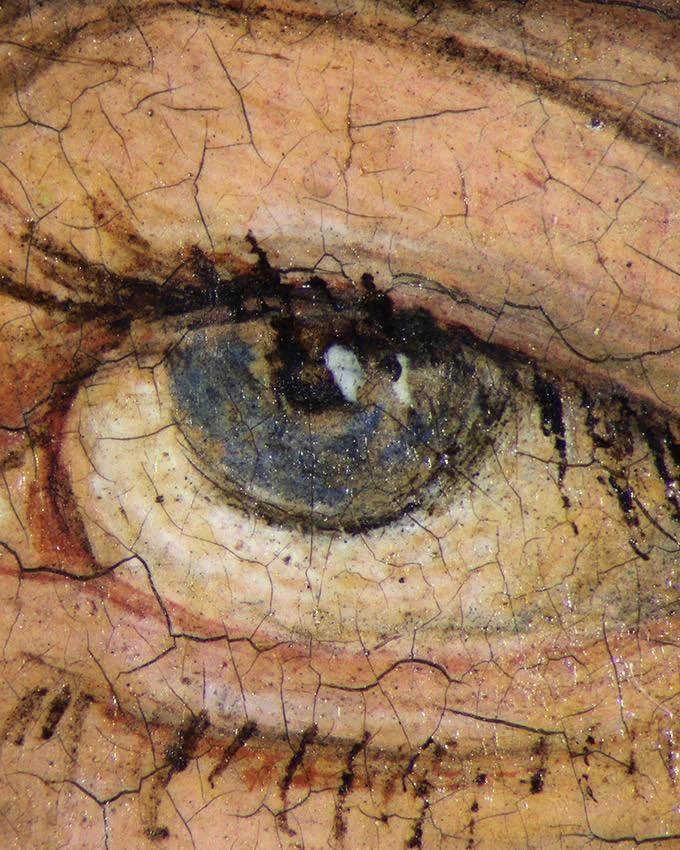
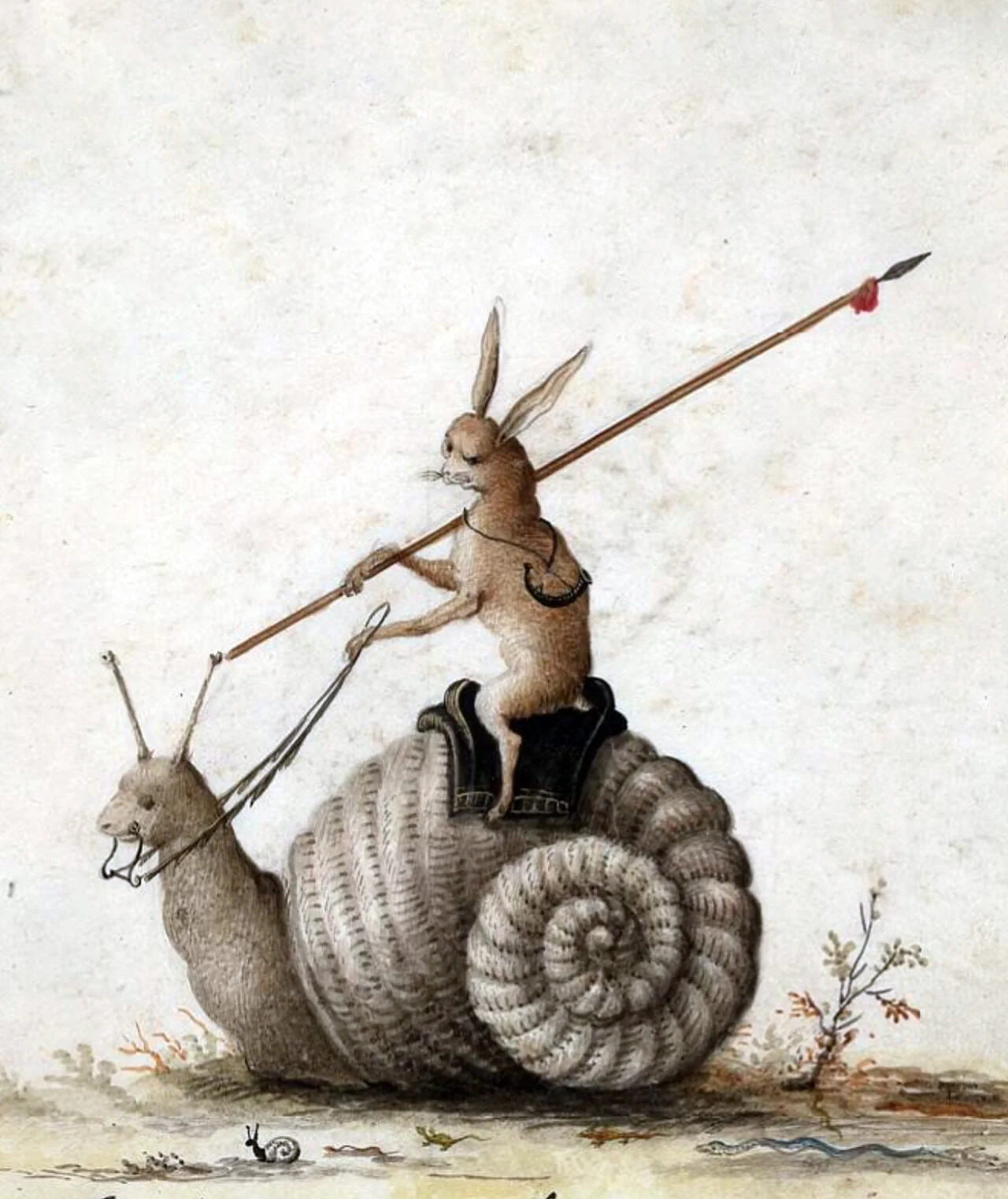
Illustration of a rabbit riding a snail, from an Armorial manuscript, created in the Netherlands, c. 1650. Collection: Biblioteca Apostolica Vaticana, Chig.G.IV.113, fol. 120v.
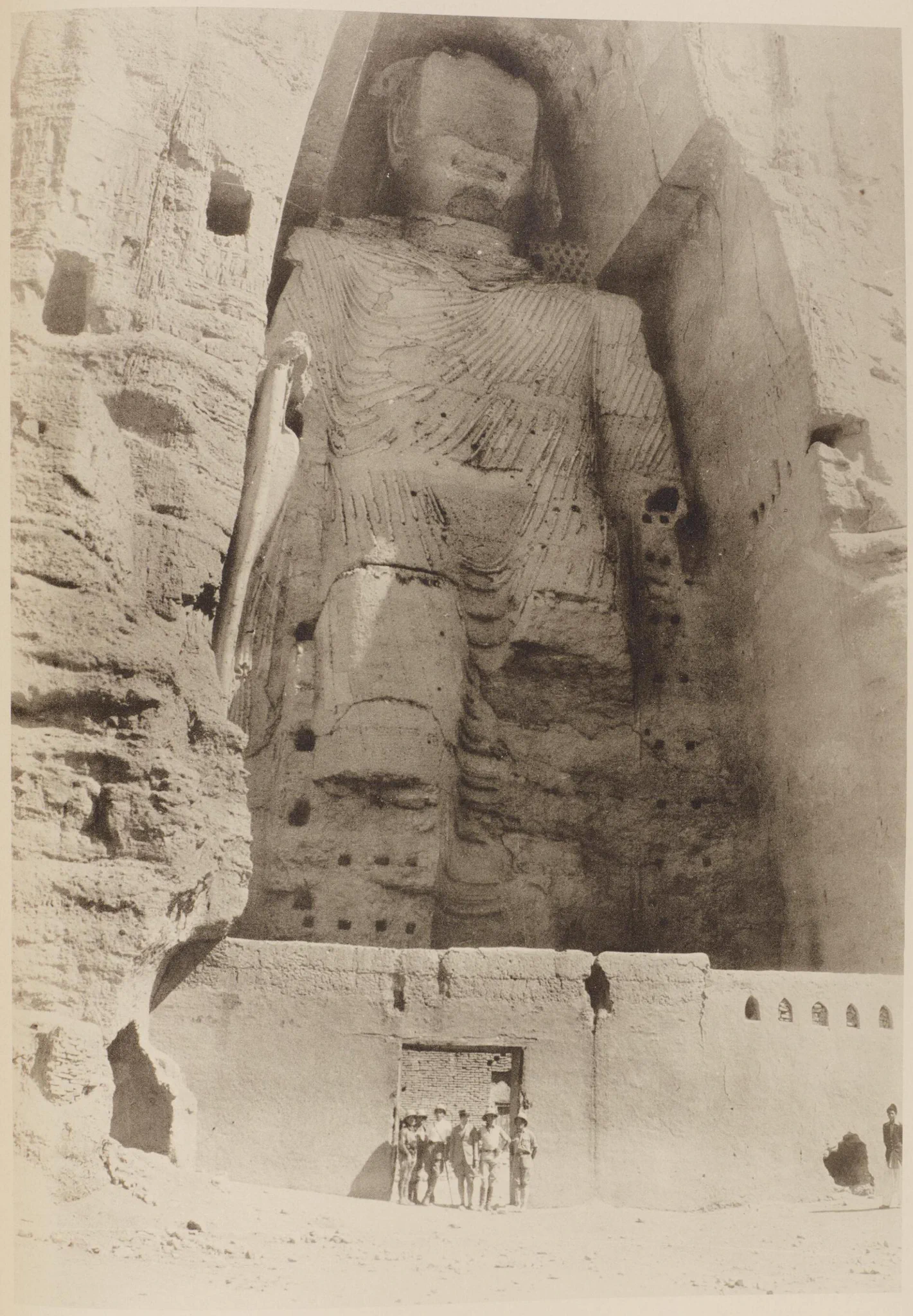
Colossal Buddha statue carved from sandstone, located in Bamiyan, Afghanistan, photographed in 1928. Photo from National Institute of Informatics.
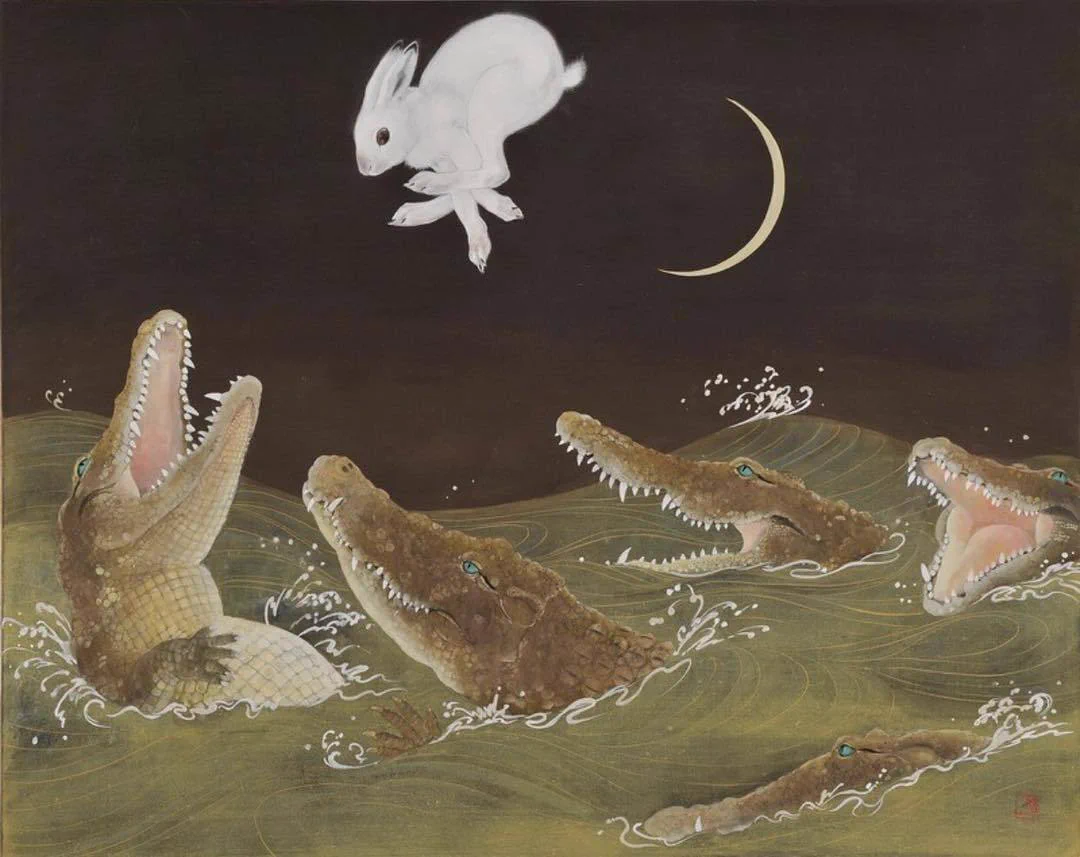
"Rabbit and Crocodiles" by Nishino Yoichi (1954 - ) Nishino Yoichi, born in 1954, is a contemporary Japanese painter renowned for his skillful integration of traditional Nihonga (Japanese-style painting) techniques with modern thematic expressions. Nihonga emerged in the late 19th century during the Meiji period (1868-1912 AD) as artists sought to preserve and evolve classical Japanese artistic traditions in response to Western influences.
"The Mermaid’s Rock," oil painting by Edward Matthew Hale, 1894.

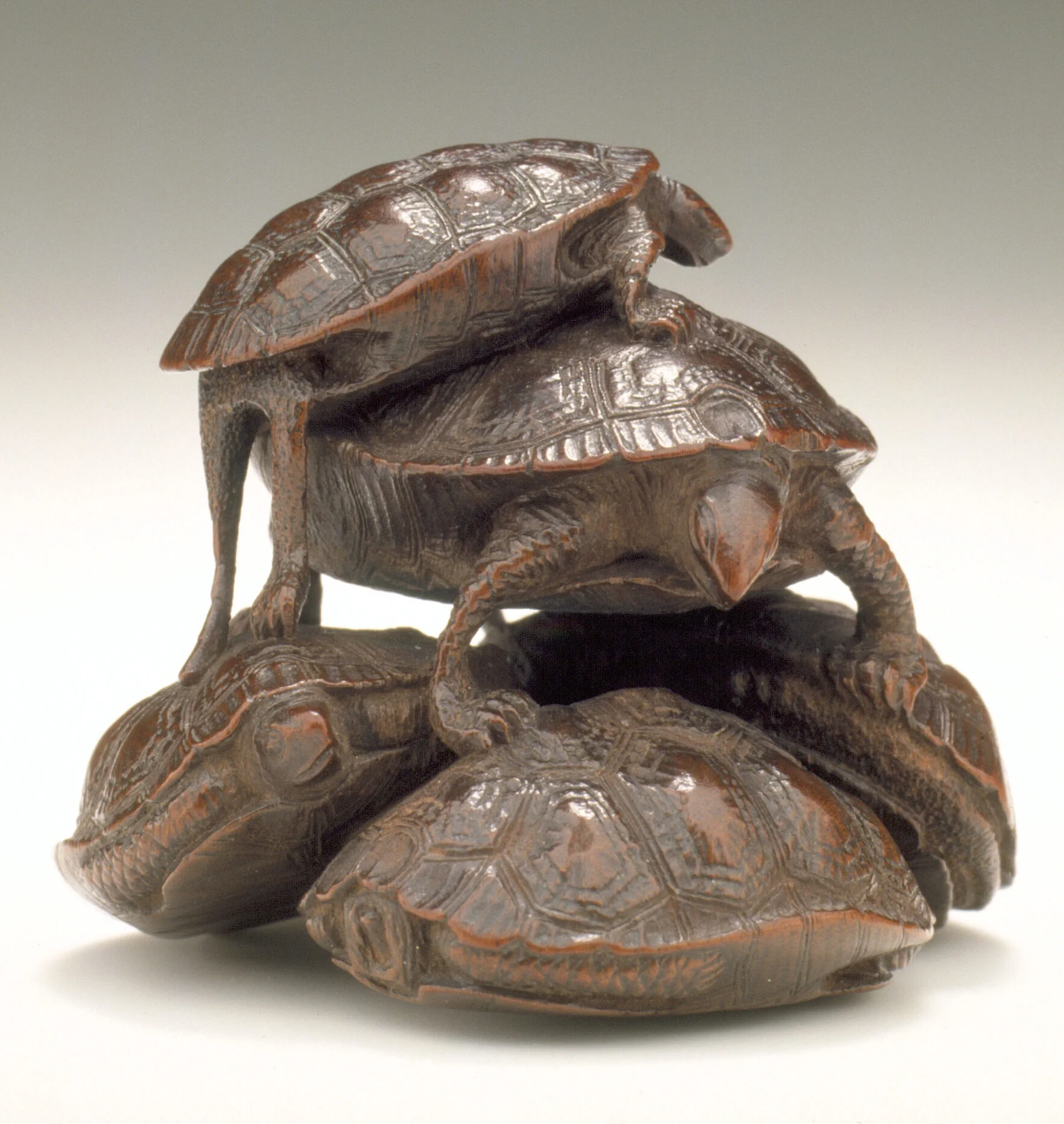
Turtle group, small sculpture; Culture: Japanese, Edo period; place of origin: Japan; early to mid–19th century AD; artist: Ryōichi (or Yoshikazu).
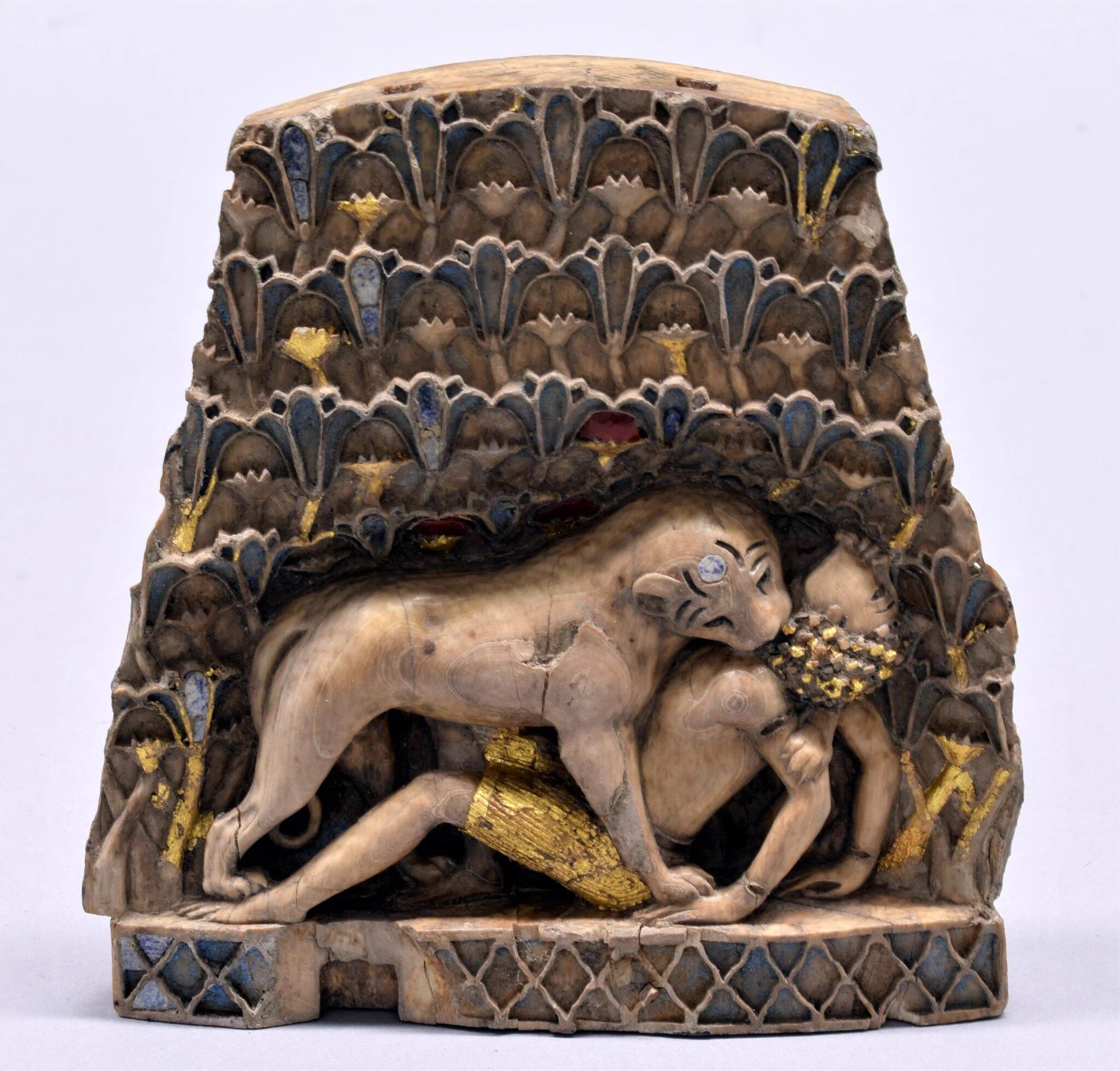
Lioness Devouring an African (Phoenician culture), ivory with gold leaf, carnelian and lapis lazuli inlay, c. 900–700 BC. Collection: The British Museum, London.
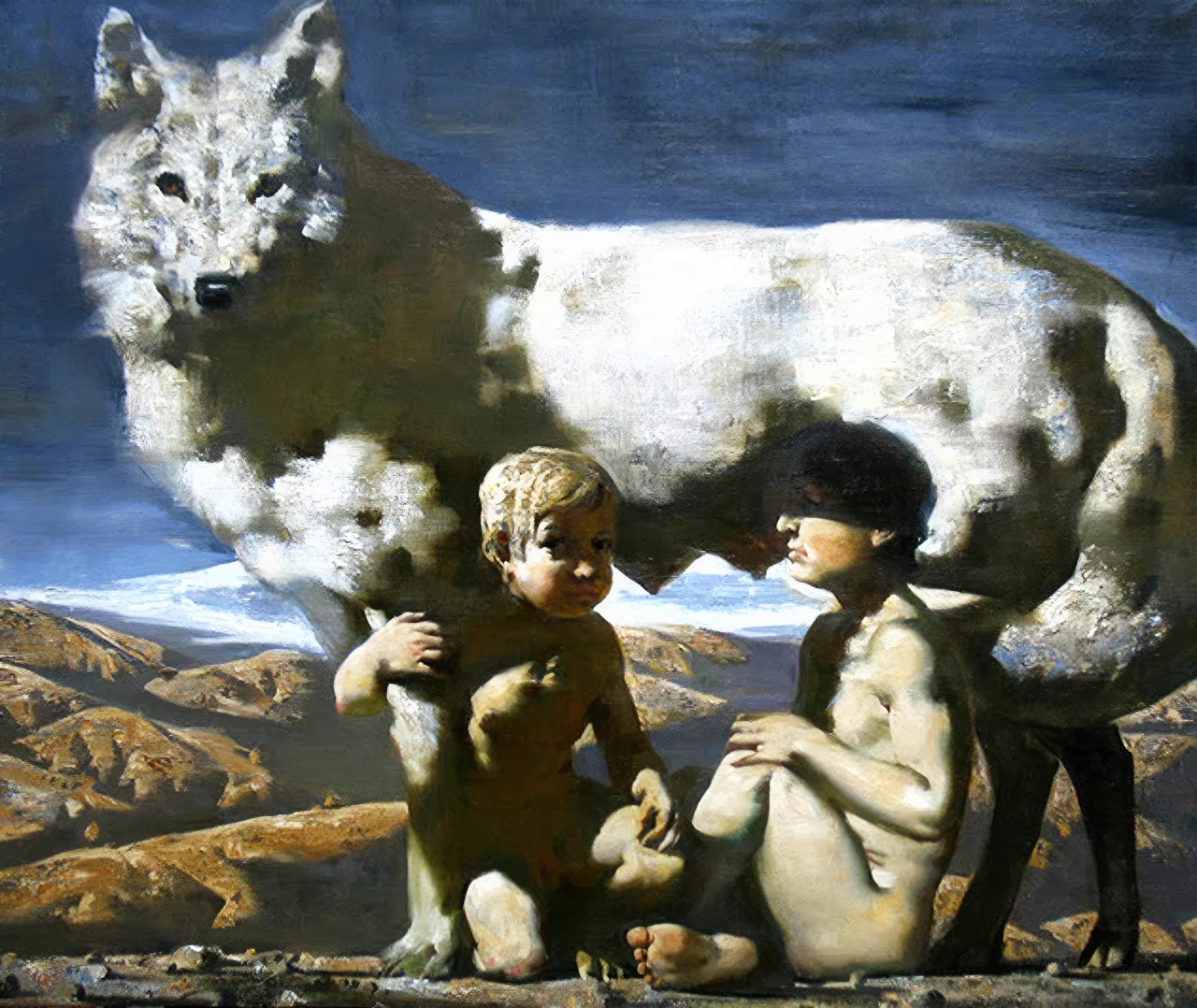
Romulus and Remus. Artist: Alexander Novoselov (b. 1980). Medium: oil on canvas.
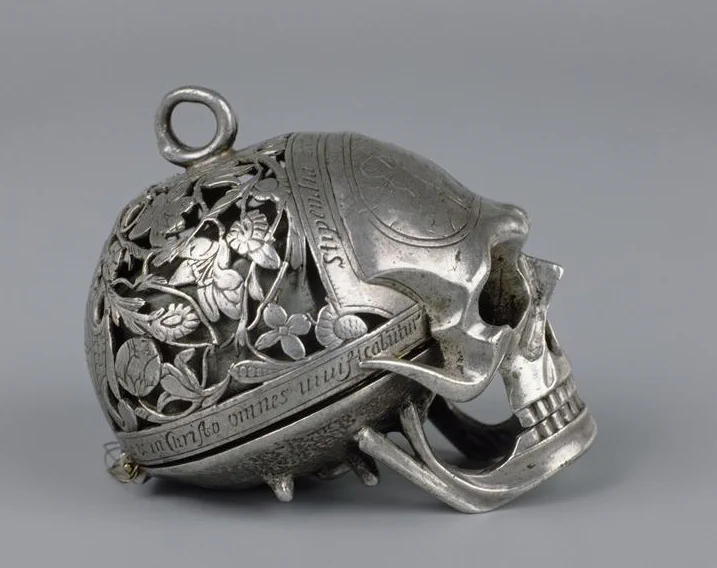
Memento mori skull watch, known as the “Mary, Queen of Scots” watch. Place of origin: Blois, France. Date: c. 1780–1850 AD; movement signed “Moysant, Blois.” Medium: engraved and pierced silver; the jaw lifts to reveal the dial. Collection: The Worshipful Company of Clockmakers. Now on display at the Clockmakers’ Museum, Science Museum, London.
Tiger Attacking a Calf (opus sectile panel). Culture: Roman Empire, Late Antique. Date: c. 4th century AD. Medium: opus sectile in polychrome marbles and stones. Collection: Capitoline Museums, Rome. Photographer: © William Perry | Dreamstime.